
How to Actually Track If AI Chatbots Are Citing Your Brand
By
Rushabh Menon
Founder | Sagashi Digital
Summarize this article using AI
AI chatbot citations are the new visibility metric nobody taught you how to measure. You've spent years watching Google Analytics, tracking keyword rankings, and checking backlinks.
But when someone asks ChatGPT "what's the best project management tool for small teams" and your brand doesn't come up, there's no red flag anywhere in your usual dashboards.
That's the problem. AI chatbots are answering millions of buying-intent questions every day, and most brands have zero idea whether they're part of the answer.
This guide breaks down exactly how to check if you're being cited, what tools actually help, and what to do once you spot the gaps.
Why does tracking AI chatbot citations even matter?
It matters because a mention inside ChatGPT or Perplexity can now influence a buying decision before a user ever visits your site.
Statistics say AI-driven traffic converts 23 times higher than traditional search traffic for many businesses. [Source - Semrush]
Search behavior has shifted. People ask AI tools direct questions instead of scrolling through ten blue links. When an AI chatbot answers, it pulls from specific sources, and it names some brands over others. If you're not in that shortlist, you're invisible at the exact moment someone's deciding what to buy or who to hire.
Traditional SEO tools weren't built to catch this. Your rank tracker won't tell you that Perplexity just recommended your competitor three times this week. That's a blind spot, and it's growing fast as more people default to AI tools over traditional search.
How is tracking AI citations different from tracking SEO rankings?
The core difference comes down to what you're actually measuring: a position on a page versus a mention inside a generated answer.
This inconsistency is the biggest headache. Ask ChatGPT the same question twice and you might get two different sets of brand mentions. That's why tracking this properly takes more than one method.
What are the manual ways to check if AI chatbots cite your brand?
You start by simply asking the chatbots the questions your customers would ask.
This sounds basic, but it's the fastest way to get a real signal. Open ChatGPT, Perplexity, Gemini, and Google's AI Overview, then run the same set of prompts across all four.
Questions worth testing:
- "What's the best [your category] for [use case]?"
- "Compare [your brand] vs [competitor]"
- "Who are the top providers of [your service]?"
- Direct brand questions like "Is [your brand] good for [use case]?"
Log what comes back. Note whether your brand shows up, how it's described, and which competitors get mentioned instead. Do this weekly, not once, since answers shift as models update.
One limitation: this only shows you what's happening right now, for you, based on your account and location. It won't scale across hundreds of query variations, which is where dedicated tools come in.
What tools can automate AI citation tracking?
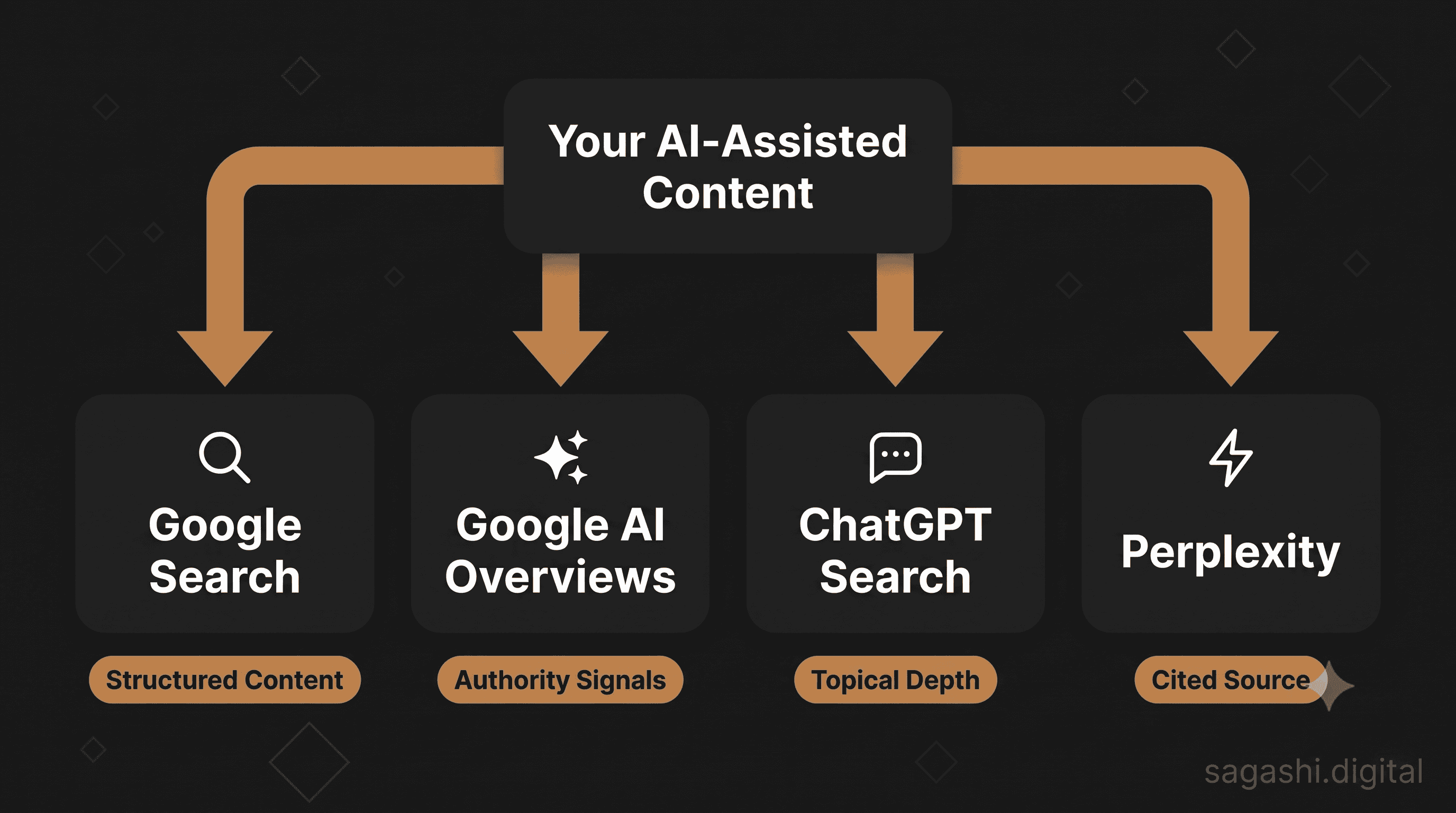
A handful of platforms now exist specifically to monitor brand mentions across AI engines at scale.
These tools run large batches of relevant queries against multiple AI models on a schedule, then report back on which brands got mentioned, how often, and in what context. Instead of manually prompting four different chatbots every week, you get a dashboard that does it continuously.
Ahrefs' guide on tracking ChatGPT visibility breaks down how this looks in practice using a database of real, search-backed prompts instead of made-up queries.
What to look for in a tool:
- Coverage across ChatGPT, Perplexity, Gemini, and Google AI Overviews (not just one)
- Historical tracking so you can see trends over time, not just a snapshot
- Competitor comparison in the same report
- Sentiment or context analysis, not just a yes/no mention count
Most of these platforms are still maturing, so expect some inconsistency between tools. Running two in parallel for a few months is a reasonable way to sanity-check the data before committing to one.
How do you check server logs for AI crawler activity?
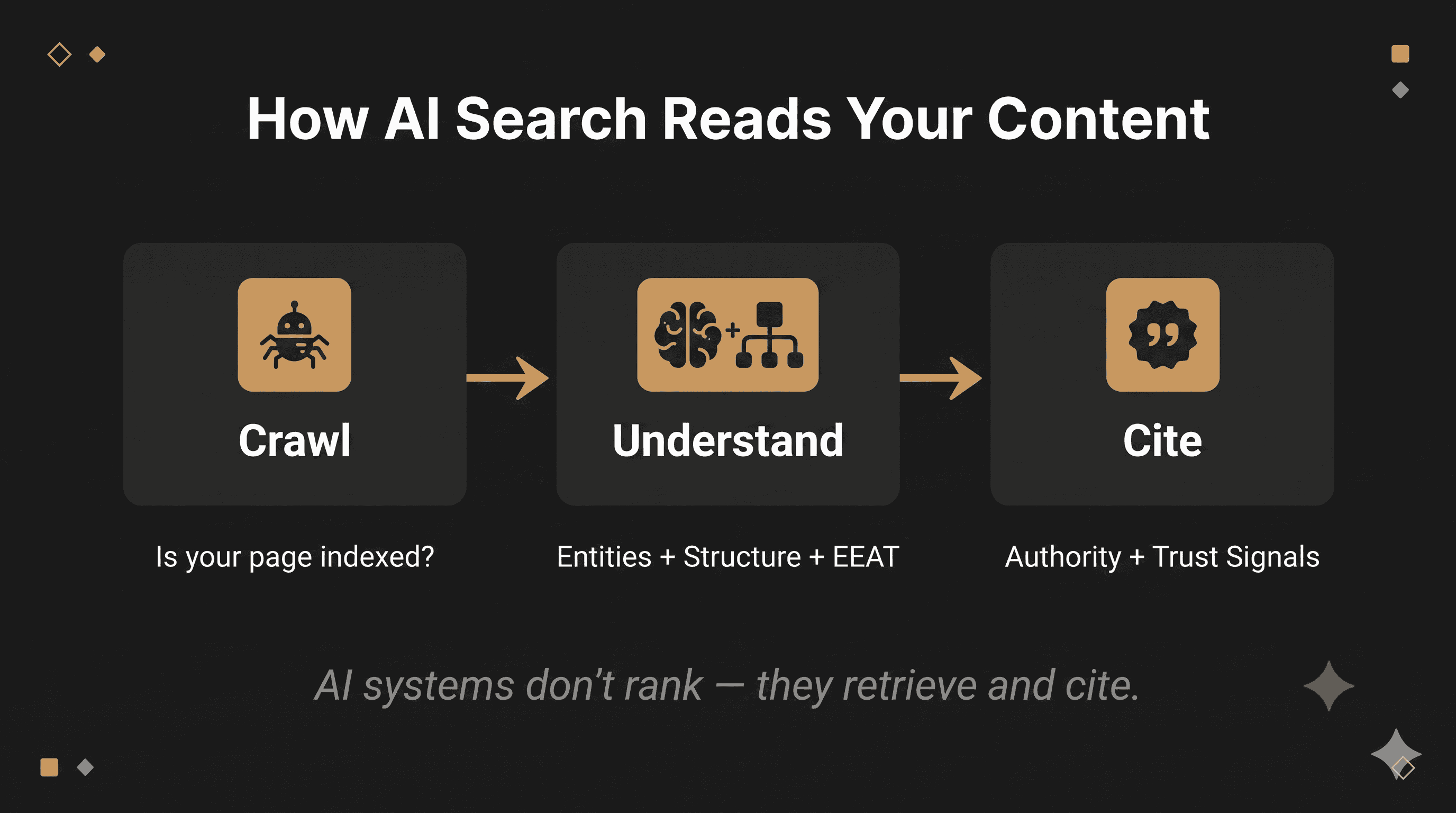
Your server logs can show you whether AI bots are even visiting your site to begin with, which is a precondition for getting cited.
Bots like GPTBot, PerplexityBot, and Google-Extended crawl the web to gather training and retrieval data. If these bots never touch your pages, it's much harder to show up in AI answers pulled from live retrieval.
Check your server logs or a log analysis tool for user-agent strings tied to these crawlers. If you see zero visits from GPTBot or PerplexityBot over a few months, that's a signal worth acting on. It usually points to a crawlability issue, like blocked robots.txt rules or thin, hard-to-parse page structure.
This won't tell you if you're actually being cited, but it tells you whether you even have a shot.
What should you do once you find citation gaps?
Once you know where you're missing, the fix comes down to making your content genuinely easy for AI systems to extract, trust, and quote.
That means:
- Structuring content with clear direct answers under every heading
- Using FAQ sections that mirror how people actually phrase questions
- Backing claims with original data, stats, or credible sources
- Building topical depth around your core service instead of scattered, shallow posts
- Making sure technical basics like schema markup and crawlability are solid
This is essentially the GEO and AEO playbook. AI engines favor structured, authoritative, well-organized content over generic pages that repeat what's already ranking. If your gaps trace back to weak structure or thin authority, that's a content and technical problem, not a tooling problem, and no amount of monitoring fixes it on its own.
At Sagashi Digital, this kind of AI visibility diagnostic is exactly where a lot of GEO work starts. It's one thing to know you're missing from AI answers. It's another to know precisely why and fix it systematically instead of guessing.
Commonly Asked Questions About AI Chatbot Citations
Do AI chatbots cite the same sources every time?
No. AI chatbots often pull different sources for the same question depending on when you ask, your location, and the version of the model you're using. That's why one-time checks give an incomplete picture and ongoing tracking works better.
Can small businesses track AI citations without expensive tools?
Yes. Manual prompting across ChatGPT, Perplexity, and Gemini on a regular schedule works fine for smaller brands with a narrower set of core queries. Paid tools become more useful once you need to track dozens of queries or competitors at scale.
Does being cited by AI chatbots actually drive traffic?
Sometimes, but not always directly. Many AI answers are zero-click, meaning the user gets their answer without visiting any site. The value is more about brand visibility and trust at the decision point, even without a direct click.
How often should you check for AI citations?
Weekly checks are a reasonable starting point for most brands, since answers can shift as models update or retrain. Larger brands or competitive industries may benefit from daily or automated tracking instead.
Is Google AI Overviews the same thing as ChatGPT citations?
No. Google AI Overviews pulls primarily from indexed web content tied to your existing SEO, while ChatGPT and other standalone AI tools may draw from a mix of training data and live retrieval. Tracking both matters since they behave differently.
Frequently Asked Questions
Ranking on Google measures traditional SEO signals, while ChatGPT relies on a different mix of training data and retrieval sources. Strong SEO rankings don't automatically translate into AI citations, since the two systems evaluate content differently.
A mention is when your brand name appears in the response. A citation typically includes a direct link or clear sourcing back to your content. Some platforms, like Perplexity, show citations more explicitly than others, like ChatGPT's default mode.
Yes. If your robots.txt blocks bots like GPTBot or PerplexityBot, your content likely won't be considered for citations on platforms that rely on live retrieval. This is worth checking if your citation numbers seem unusually low.
Many do. Most dedicated AI monitoring platforms let you track competitor brand mentions alongside your own, which helps you see who's winning the citations you're missing.
No. AI citation tracking works best as an addition to, not a replacement for, traditional SEO monitoring. Both metrics matter, since traditional search and AI-driven search still coexist and often influence each other.
Ready to Get Found by More Customers?
We help you generate qualified inbound leads through search - without paying for ads. Our content strategy is built to create a consistent pipeline, shorten sales cycles, and turn organic traffic into revenue.