
How AI Overviews Affect SEO for Blogging in 2026 (What Has Changed?)
By
Rushabh Menon
Founder | Sagashi Digital

Summarize this article using AI
How AI Overviews affect SEO comes down to one major shift: blogs no longer compete for rankings alone. They now compete to become trusted sources that AI cites.
SEO isn't dead. But success isn't just about rankings and clicks anymore. AI Overviews can lower organic clicks for some searches. But they can also boost your brand's visibility through citations and mentions.
Google's AI Overviews are changing how people find content. Users often get a full answer at the top of the page. This answer pulls from several websites at once. So your blog can influence a reader even without a click.
This shift calls for a new blogging strategy. Don't write only to rank for keywords. Instead, create clear, well-structured content that AI can understand, trust, and cite.
In this guide, you'll learn:
- How AI Overviews are changing SEO for blogging
- What this means for your traffic and rankings
- Strategies to keep your content visible in an AI-first search world

What Are Google AI Overviews?
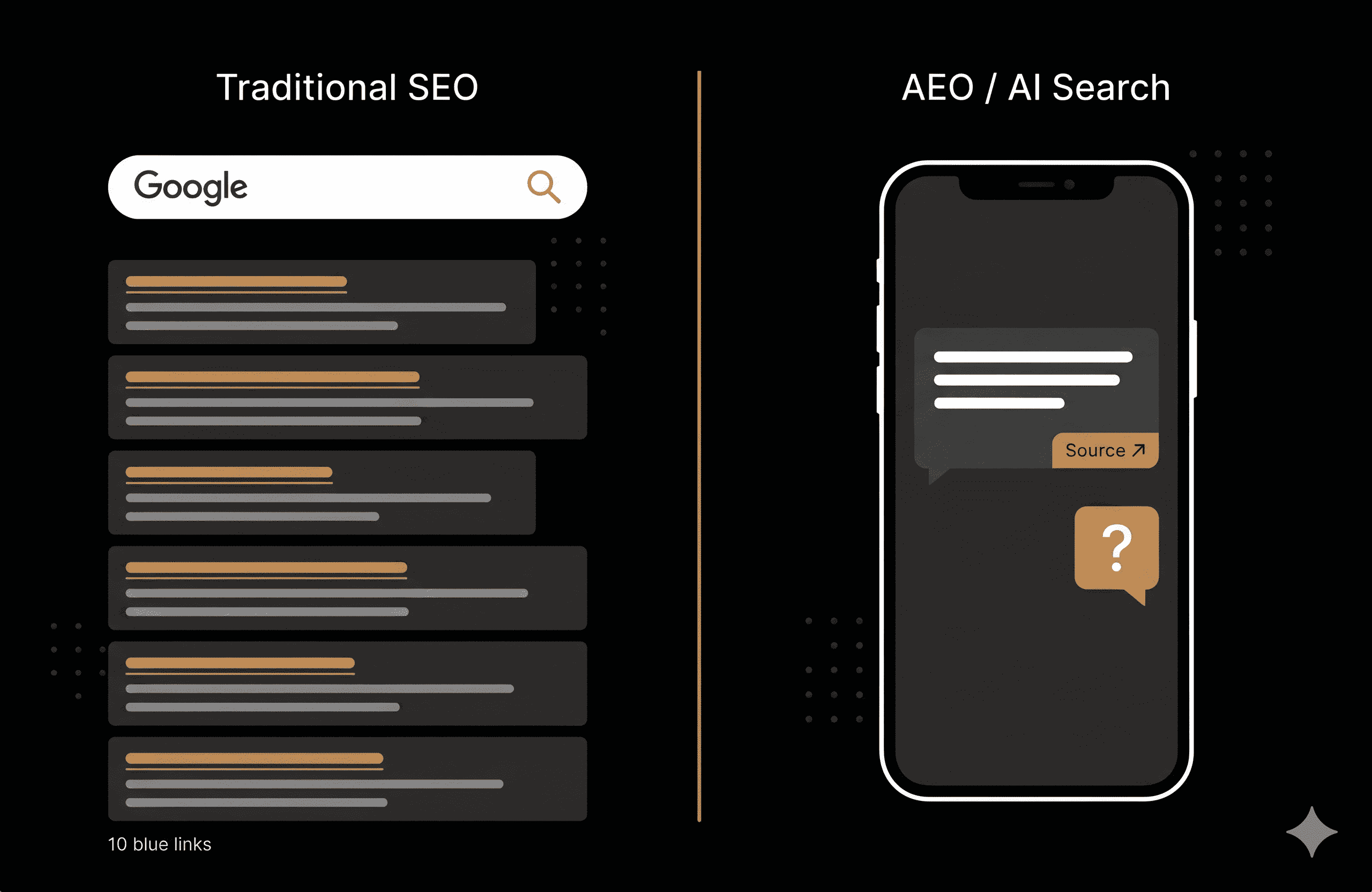
Google AI Overviews are AI-generated summaries that appear above traditional search results, giving users direct answers by combining information from multiple trusted sources. Instead of requiring users to click through several websites, AI Overviews synthesize the most relevant information into a single response while citing the pages used to generate it.
How AI Overviews Work?
When Google determines that an AI-generated response will better answer a user's query, it analyzes information from multiple web pages and generates a concise summary. Rather than relying on a single source, AI Overviews pull together insights from several authoritative websites and include links to the sources they reference.
For bloggers, this means your content doesn't have to rank #1 to influence a search. If your article provides accurate, well-structured, and trustworthy information, it can be cited as part of an AI Overview.
How They're Different From Featured Snippets?
Featured snippets typically pull a short answer from one webpage and display it at the top of the search results.
AI Overviews work differently. Instead of extracting content from a single page, they generate a new response by combining information from multiple sources. As a result, several websites can contribute to one AI-generated answer, giving more brands an opportunity to earn visibility through citations.
When Google Shows AI Overviews?
Google doesn't display AI Overviews for every search.
They're most commonly shown for informational, exploratory, and complex queries where users benefit from a summarized answer. Searches involving comparisons, recommendations, or multi-step explanations are also more likely to trigger an AI Overview.
For bloggers, this means creating content that answers real questions clearly and comprehensively is becoming just as important as optimizing for traditional keyword rankings.
How AI Overviews Affect SEO for Blogging?
AI Overviews are changing how blogs earn visibility, traffic, and authority. Instead of relying solely on rankings and clicks, blogs now need to earn trust and citations from AI-powered search experiences.
Less Reliance on Blue Links
Traditional SEO focused on getting users to click one of Google's blue links. AI Overviews reduce that reliance by answering questions directly at the top of the search results. As a result, blogs are increasingly competing to become sources that Google cites rather than simply ranking first.
More Zero-Click Searches
AI Overviews are accelerating the growth of zero-click searches. Users can often find the information they need without leaving Google, which means informational blog posts may see fewer clicks even when they're helping answer the query.
AI Citations Become Valuable
Being cited in an AI Overview is becoming a new form of visibility. AI citations position your blog as a trusted source, increase brand exposure, and can influence user decisions even if they don't immediately visit your website.
Rankings Matter Less Than Authority
A high ranking is still valuable, but it no longer guarantees visibility in AI search. Google is increasingly selecting content based on its expertise, trustworthiness, and topical authority, allowing authoritative pages to be cited even if they aren't ranked first.
Content Quality Matters More Than Volume
Publishing more AI content isn't enough anymore. Blogs that provide original insights, answer questions clearly, and demonstrate deep expertise are far more likely to be cited by AI Overviews than large volumes of generic or repetitive articles.
7 Ways AI Overviews Are Changing Blogging in 2026
Modern blogs need to be written for both humans and AI. While readers still value helpful, engaging content, AI systems prioritize content that's authoritative, well-structured, and easy to understand. Here are seven ways AI Overviews are reshaping blogging in 2026.
Traffic Is Becoming More Qualified
Approximately 49% of marketers agree web traffic decreased due to AI Overviews answering questions directly. [Source - SeoProfy]
Although AI Overviews may reduce clicks for some informational searches, the visitors who do click through are often further along in their decision-making journey. This means blogs can attract fewer visitors overall but generate more qualified traffic and better conversion rates.
Authority Matters More Than Keyword Density
Repeating a target keyword is no longer enough to earn visibility. Google increasingly rewards content that demonstrates expertise, trustworthiness, and topical depth, making authority a stronger ranking signal than keyword density.
Original Research Is Rewarded
AI Overviews favor content that contributes something unique to the web. Original research, proprietary data, case studies, and expert insights are more likely to be cited than articles that simply repackage existing information.
Topical Authority Beats Isolated Articles
Publishing standalone blog posts around individual keywords is becoming less effective. Brands that build comprehensive content clusters covering an entire topic are more likely to be viewed as authoritative sources by both Google and AI systems.
Clear Answers Outperform Lengthy Introductions
Users and AI want answers quickly. Blogs that address the main question within the opening paragraphs are more likely to satisfy search intent and be referenced in AI-generated summaries than articles with long, unnecessary introductions.
Structured Content Gets Cited More Often
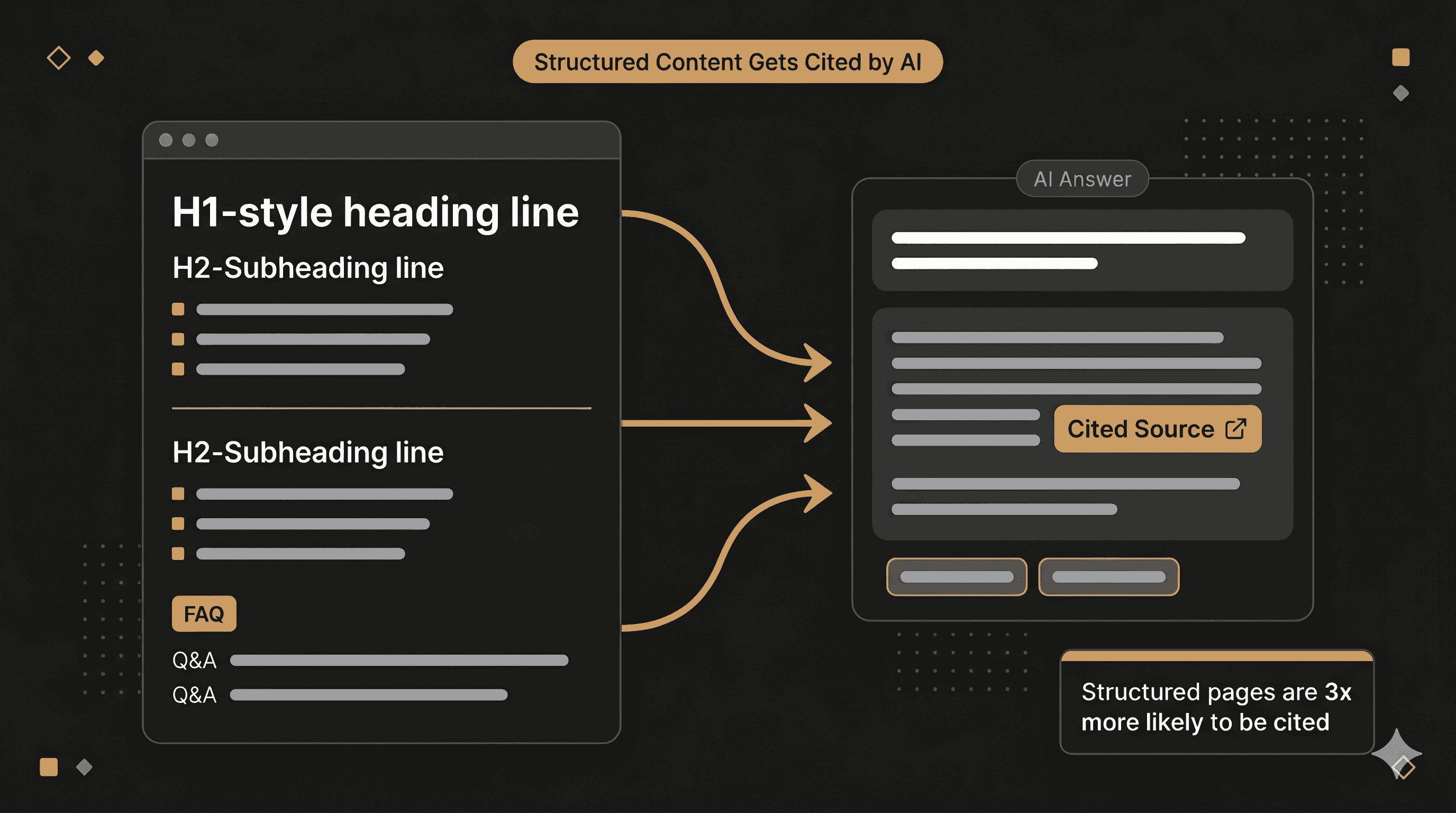
Clear headings, concise paragraphs, bullet points, tables, and FAQ sections make content easier for AI to understand and extract. Well-structured blogs have a better chance of being cited in AI Overviews than poorly organized content.
Commercial Pages Are Becoming More Important
As AI handles more informational queries directly, commercial pages such as product pages, service pages, comparison articles, and pricing guides are becoming increasingly valuable. These pages target users with higher purchase intent and are more likely to drive meaningful business outcomes.
What Types of Blog Content Perform Best in AI Overviews?
Not all blog content has the same chance of appearing in AI Overviews. Google tends to favor content that is original, authoritative, well-structured, and directly answers users' questions. Here's how different content formats typically perform.
Here's why each content type performs differently:
- How-to Guides (High): Step-by-step guides answer specific questions clearly, making them ideal for AI-generated summaries.
- Original Research (Very High): Proprietary data, surveys, and unique insights provide information AI can't find elsewhere, making them highly citable.
- Case Studies (High): Real-world examples demonstrate expertise and offer evidence-based insights that strengthen credibility.
- Comparison Articles (High): Users frequently ask AI to compare products, services, or solutions, making well-structured comparison content a common source for AI citations.
- Statistics Pages (Very High): AI models often reference reliable statistics when generating answers. Regularly updated data pages can become valuable citation sources.
- Opinion Pieces (Medium): Thought leadership can build authority, but because opinions are subjective, they're cited less frequently than factual or instructional content.
- Thin Listicles (Low): Generic listicles with little original insight offer limited value and are less likely to be trusted or cited by AI Overviews.
The common thread is simple: the more original, authoritative, and helpful your content is, the more likely it is to earn visibility in AI Overviews.
How to Optimize Your Blog for Google AI Overviews?
Ranking well is no longer enough. To increase your chances of being featured in Google AI Overviews, your blog needs to be easy for both users and AI to understand, trust, and reference.
Answer the User's Question Immediately
Don't bury the answer beneath a lengthy introduction. Address the reader's primary question within the first few paragraphs, then use the rest of the article to provide supporting details, examples, and context.
Cover Topics, Not Just Keywords
Instead of creating multiple articles around similar keywords, build comprehensive content that covers an entire topic. Address related questions, subtopics, and user intent to demonstrate expertise and improve your chances of being cited.
Add Original Insights and First-Party Data
Google values content that offers something unique. Include original research, customer data, case studies, expert opinions, or real-world examples to make your content more authoritative and distinguish it from generic articles.
Use Clear Headings and Structured Formatting
Organize your content with descriptive headings, short paragraphs, bullet points, tables, and FAQ sections. A clear structure helps readers scan your content and makes it easier for AI systems to extract and summarize key information.
Build Topical Authority
Create interconnected content around your core areas of expertise instead of publishing isolated blog posts. Strong internal linking and comprehensive topic coverage signal to Google that your website is a reliable source on the subject.
Strengthen EEAT Signals
Demonstrate Experience, Expertise, Authoritativeness, and Trustworthiness (EEAT) by citing credible sources, showcasing author expertise, keeping content up to date, and ensuring factual accuracy. Strong EEAT signals improve your credibility with both users and AI-powered search.
Common Blogging Mistakes After AI Overviews
AI Overviews haven't changed the fundamentals of creating helpful content, but they have exposed blogging practices that no longer work. Avoid these common mistakes if you want your content to remain visible in AI-powered search.
Writing Only for Keywords
Keyword optimization still matters, but stuffing articles with exact-match phrases won't help you earn AI citations. Focus on answering user intent and covering topics comprehensively instead of targeting individual keywords.
Long, Fluffy Introductions
Readers and AI want answers quickly. If your article takes several paragraphs to get to the point, you're less likely to satisfy search intent or be referenced in an AI Overview.
Publishing Generic AI-Generated Content
According to statistics, AI allows marketers to produce 47% more content per month compared to traditional methods.[Source - SeoProfy]
However, content that simply repeats what's already available online offers little value. AI Overviews are more likely to cite blogs that include original insights, expert perspectives, case studies, or first-party data.
Ignoring Entity Optimization
AI understands entities—not just keywords. Clearly defining your brand, products, services, and areas of expertise helps search engines and AI systems better understand what your content is about and when it should be recommended.
Skipping FAQ Sections
FAQ sections address the conversational questions users ask AI assistants. They also make it easier for Google to identify concise answers, improving your chances of appearing in AI-generated responses.
Weak Internal Linking
Publishing standalone articles without linking related content makes it harder for Google to understand your topical expertise. A strong internal linking strategy helps build topical authority and improves content discoverability.
No Original Research
Blogs that rely entirely on existing information are less likely to stand out. Publishing original research, proprietary data, surveys, or real-world examples gives AI systems unique information to reference and increases your chances of earning citations.
How to Measure Success in the AI Overview Era?
Success in the AI Overview era isn't measured by rankings alone. Instead, focus on metrics that show whether your content is being discovered, trusted, and driving meaningful business outcomes through AI-powered search.
AI Citations
Track how often your content is cited in Google AI Overviews and other AI search platforms. Frequent citations indicate that Google considers your content a reliable source and increase your brand's visibility even when users don't click through.
AI Visibility
AI visibility measures how consistently your brand appears across AI-generated responses. Rather than focusing on a single keyword ranking, it provides a broader view of your presence across different topics, prompts, and search experiences.
AI Referral Traffic
Measure how much traffic AI platforms send to your website and identify which pages receive those visitors. This helps you understand whether your AI visibility is translating into qualified website traffic.
Commercial Landing Page Traffic
Not all traffic has equal value. Monitor visits to product pages, service pages, pricing pages, and comparison pages to see whether AI Overviews are driving users with stronger purchase intent.
Topic Authority
Instead of tracking rankings for individual keywords, measure how well your website covers an entire topic. Strong topical authority increases your chances of being cited across a wider range of related AI queries.
Conversions
The ultimate measure of success is business impact. Track leads, demo requests, purchases, and other conversions generated by AI-driven traffic to understand the true ROI of your content strategy.
Tools to Measure AI Overview Performance
To monitor these metrics effectively, combine traditional analytics with AI-focused platforms:
- Semrush AI Toolkit to track AI visibility, citations, and grounding queries.
- Google Analytics 4 (GA4) to measure AI referral traffic, user engagement, and conversions.
- Google Search Console to monitor indexing, organic performance, and the technical health that supports both traditional SEO and AI visibility.
By tracking these metrics together, you'll gain a much clearer picture of how your blog performs in both traditional search and Google's AI-powered search experience.
Blogging Isn't Dead - It's Evolving With AI
AI Overviews haven't killed blogging, they've changed what success looks like. While rankings and organic traffic still matter, they're no longer the only indicators of performance in an AI-first search landscape.
The blogs that succeed in 2026 will focus on building topical authority, earning AI citations, creating well-structured content, and satisfying user intent rather than chasing rankings alone. By becoming a trusted source that AI platforms can confidently reference, your content can influence users even before they visit your website.
At Sagashi Digital, we help brands build future-ready content strategies that combine SEO, AEO, and GEO. From creating authoritative blog content to improving AI visibility, we help ensure your content not only ranks in traditional search but also earns citations and recommendations in Google AI Overviews and other AI-powered search platforms.
Commonly Asked Questions About How AI Overviews Affect SEO
Do AI Overviews replace traditional SEO?
No. AI Overviews complement traditional SEO rather than replace it. Strong SEO helps your content get indexed and discovered, while AI optimization improves your chances of being cited and recommended in AI-generated answers.
Can my blog appear in AI Overviews without ranking #1?
Yes. Google AI Overviews often cite multiple sources, and a page doesn't always need to rank first to be included. Content that is authoritative, well-structured, and directly answers the user's query can be cited even if it isn't the top organic result.
How do I optimize blog posts for AI Overviews?
Focus on answering the user's question early, covering topics comprehensively, adding original insights, using clear headings and structured formatting, strengthening EEAT signals, and building topical authority through related content.
Do AI Overviews reduce website traffic?
They can reduce clicks for some informational searches because users often get answers directly on the search results page. However, blogs that earn AI citations can still increase brand visibility and attract more qualified visitors for high-intent queries.
What types of content are most likely to be cited?
Content that provides original research, statistics, how-to guides, case studies, comparison articles, and clear, fact-based answers is more likely to be cited than generic or thin content.
Frequently Asked Questions
You can track AI Overview visibility using tools like Semrush AI Toolkit, which monitor AI citations, visibility, and grounding queries. Pair this with Google Analytics 4 (GA4) to measure AI referral traffic and Google Search Console to monitor your overall organic performance.
AI Overviews present both challenges and opportunities. While they may reduce clicks for some informational queries, they also reward blogs that demonstrate expertise and provide high-quality, trustworthy content. Brands that adapt their content strategy can gain more visibility through AI citations and recommendations than through rankings alone.
No. AI Overviews rely on high-quality web content to generate accurate responses. Blogs that provide original insights, expert knowledge, and trustworthy information will continue to play a vital role by serving as the sources AI references.
There is no fixed timeline. It depends on factors such as content quality, topical authority, crawlability, and whether Google considers your page a reliable source for answering specific queries. Continuously updating and improving your content can increase your chances of being cited over time.
You should write for users first while making your content easier for AI to understand. This means answering questions early, covering topics comprehensively, using clear headings, adding original insights, and structuring your content so it can be easily summarized and cited. The goal isn't to write for AI instead of people, it's to create content that serves both effectively.
Ready to Get Found by More Customers?
We help you generate qualified inbound leads through search - without paying for ads. Our content strategy is built to create a consistent pipeline, shorten sales cycles, and turn organic traffic into revenue.